Golden Gate Bridge: Iconic San Francisco Landmark
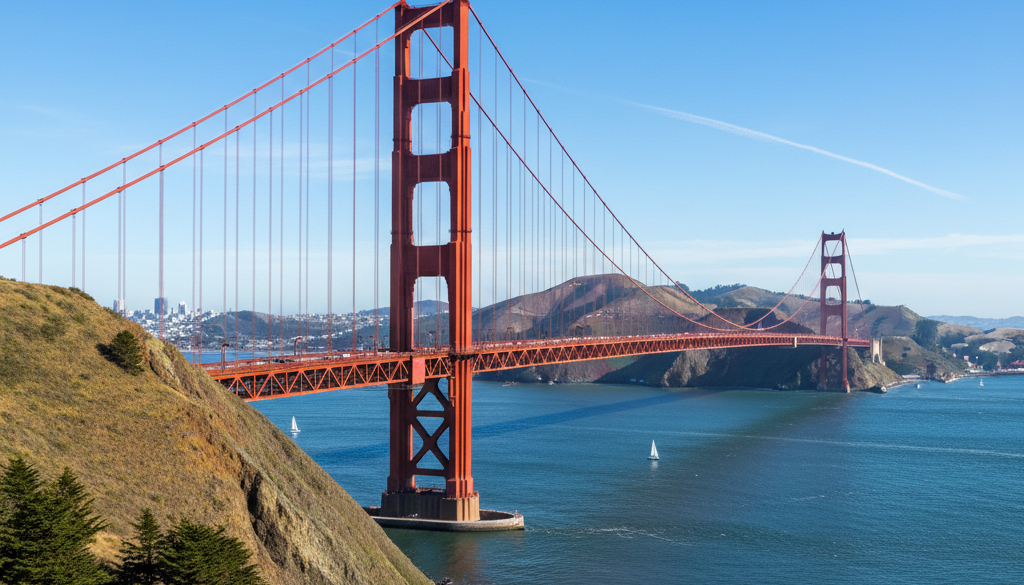
The Golden Gate Bridge dominates San Francisco’s skyline as the city’s most iconic landmark. This majestic suspension bridge connects San Francisco to Marin County across the Golden Gate Strait.
Golden Gate Bridge History Facts
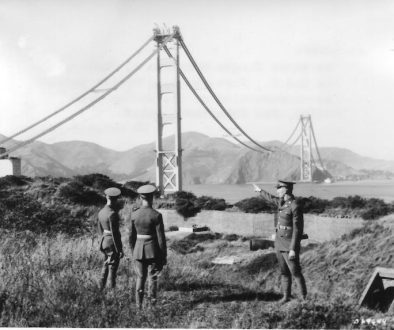
Joseph Strauss designed the bridge in the 1930s. Construction began in 1933 during the Great Depression. Workers completed the bridge ahead of schedule in 1937.
The bridge opened to pedestrians on May 27, 1937. Vehicles crossed the bridge the next day. The original construction cost was $35 million. Over 200,000 people attended the opening celebration.
Golden Gate Bridge Engineering Marvel
Engineers built the bridge with revolutionary suspension technology. The main span stretches 4,200 feet between towers. Towers rise 746 feet above the water.
The bridge’s distinctive international orange color enhances visibility in fog. Architects chose orange for both safety and aesthetics. The bridge’s Art Deco design reflects 1930s architectural trends.
Engineers used approximately 600,000 rivets to construct the bridge. The entire structure weighs about 887,000 tons.
Visiting Guide
Millions of tourists visit the Golden Gate Bridge each year. Pedestrians walk across the bridge on a dedicated walkway. Cyclists enjoy a separate lane for bike traffic.
The bridge offers breathtaking views of San Francisco Bay. Alcatraz Island becomes visible from certain viewpoints. The best photo spots include Battery Spencer and Fort Point.
The bridge operates 24 hours a day for vehicles. Pedestrian access is available during daylight hours. The Golden Gate Bridge Welcome Center provides visitor information.
Maintenance Challenges
The bridge faces constant exposure to saltwater and fog. Workers continuously repaint the structure to prevent corrosion. The original painting process took 30 years to complete.
Engineers regularly inspect the bridge for structural integrity. Strong winds present challenges for bridge stability. The bridge survived the 1989 Loma Prieta earthquake with minimal damage.
Modern upgrades include advanced seismic retrofitting. The bridge requires ongoing investment to preserve its condition.
Active Suicide Prevention Efforts
Tragically, the bridge attracts suicide attempts. Over 1,700 people have died from jumping since 1937. Authorities installed safety nets on the San Francisco side.
The bridge district plans to extend nets across the entire span. Crisis intervention teams patrol the bridge regularly. Organizations offer support services for those in crisis. The barrier project represents an investment in human life.
Cultural Significance
The bridge appears in countless films and television shows. It has been featured in over 70 movies since the 1930s. The structure symbolizes innovation and American engineering.
Photographers worldwide capture its majestic silhouette. Artists have immortalized the bridge in various media. The bridge represents San Francisco’s identity globally. Its image appears on countless postcards and souvenirs.
Golden Gate Bridge Future Developments
The bridge faces challenges from climate change and sea level rise. Engineers plan for stronger weather events in the future. Sustainability initiatives aim to reduce the bridge’s environmental impact.
Transportation authorities explore ways to reduce traffic congestion. The bridge will continue serving as a vital transportation link. Preserving this icon requires ongoing commitment and investment.
The Golden Gate Bridge stands as a testament to human achievement. It combines engineering excellence with breathtaking beauty. This iconic structure will continue inspiring awe for generations.
Visitors experience its magnificence firsthand every day. The bridge remains an essential part of San Francisco’s identity.
It is easy to view the bridge by taking a tour with San Francisco Love Tours, and discover the magic of San Francisco’s most visited attraction